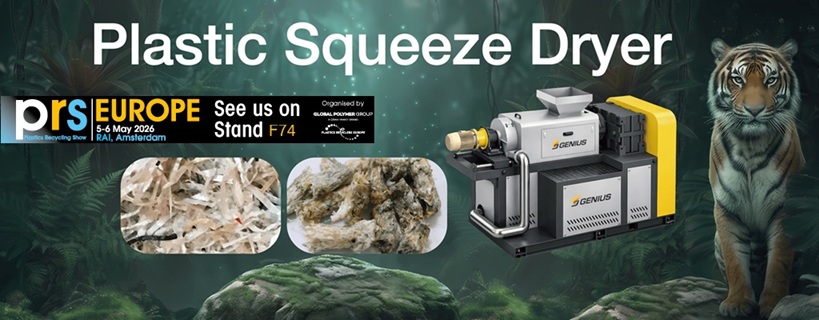
We are excited to announce that we will be exhibiting at the Plastics Recycling Show Europe (PRSE) 2026, held at the RAI Amsterdam on May 5-6, 2026.
As
the plastics recycling industry marks its 10th anniversary, this year's event
is set to be the biggest yet.
We would love for you to join us to explore the
latest innovations and discuss how we can support your sustainability goals in
the coming year.
Visit
Us at Stand F74
Dealing with wet films is always a headache, right?
Our
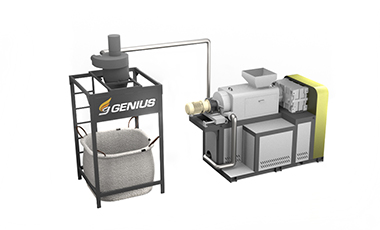
machine makes life a lot easier by:
*Getting
it bone-dry :
Dropping moisture from 50% down to just 1% instantly with our specially
designed extruder screw.
*Saving
on power :
It’s much more energy-efficient than traditional thermal drying to
save up to 40% of energy using.
*Boosting
your output :
Your pelletizers will run up to 20% faster because the material is
pre-compacted and dry.
It’s
all about making your daily operation a bit more "Genius".
Dates: May 5th – 6th, 2026
Location: RAI Amsterdam, The Netherlands
Our Stand: F74
· Schedule a Meeting
To ensure we have dedicated time to discuss your specific needs, we invite you
to book a private meeting with our team during the show.
· Please click below email to suggest
your preferred time slot:
We look forward to seeing you in Amsterdam!