
The semiconductor and electronics industries use large quantities of IC trays to protect integrated circuits during manufacturing, assembly, testing, storage, and transportation. Over time, some trays become damaged, warped, or obsolete and can no longer be reused. Instead of disposing of these trays, manufacturers and plastic recyclers can recover valuable engineering plastics through an efficient recycling process.
For clean industrial IC tray scrap, recycling typically requires two main machines: a plastic crusher and a pelletizing system are usually enough. Unlike heavily contaminated post-consumer plastics, clean IC trays can often skip the washing stage. We supply plastic recycling equipment and systems that turn scrapped IC trays into recycled pellets.
IC trays, also known as semiconductor trays or JEDEC trays, are manufactured from various engineering plastics selected for their heat resistance, dimensional stability, and electrostatic discharge (ESD) requirements.
Common materials include:
Many IC trays contain carbon black or other conductive additives to provide ESD protection. Trays containing carbon black generally produce black recycled pellets.
Because different engineering plastics have different processing temperatures and material properties, proper resin identification and sorting are essential before recycling.
Even if trays have similar appearances, different resin types should not be mixed without confirming material compatibility.
For clean industrial IC tray scrap, the recycling process is relatively straightforward.
The two main processing stages are crushing and pelletizing. Depending on the material and moisture conditions, additional pre-drying or material handling equipment may be necessary.
The first step is to reduce scrapped IC trays into smaller, more uniform plastic flakes using a plastic crusher or granulator.
This process provides several benefits:
The required crushing equipment depends on tray dimensions, material hardness, and the desired particle size.
For larger or bulky trays, a pre-shredding stage may be considered before granulation.
For rigid IC trays, we supply our Plastic Crusher GP Series (GP-380 to GP-800). Tell us tray size and monthly volume, and we will recommend a chamber and screen setup.
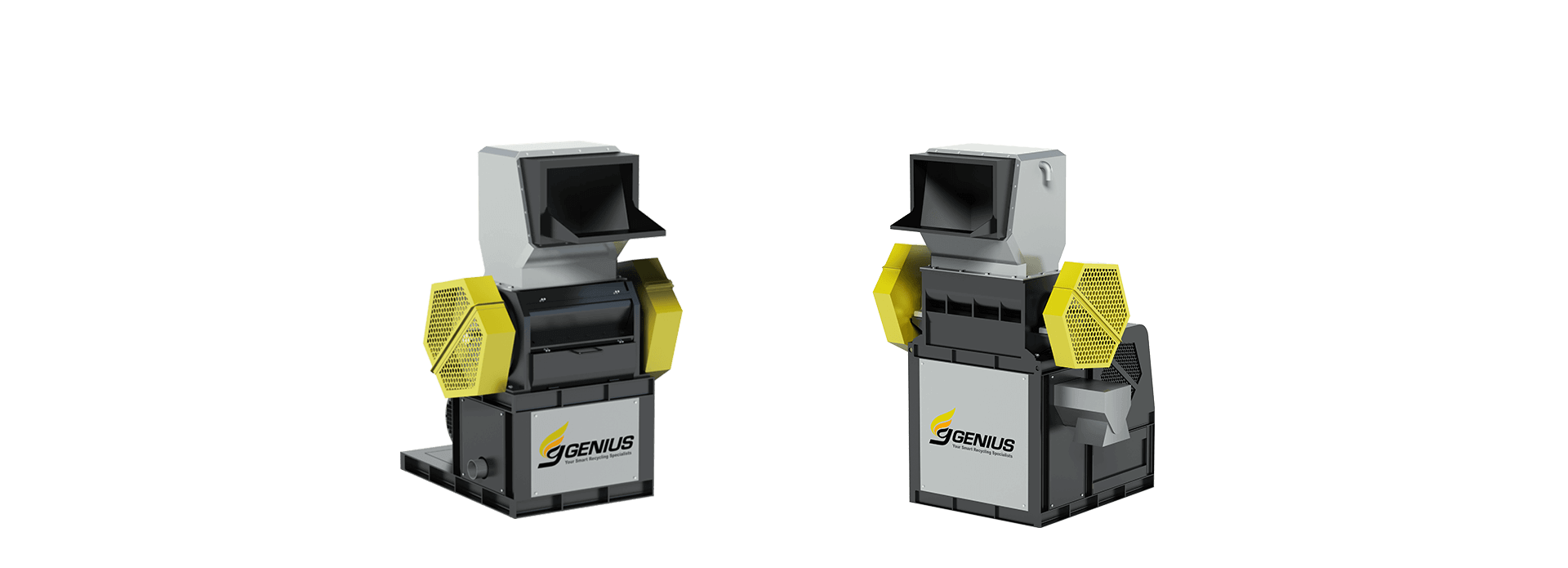
(Plastic Crusher)
After crushing and any necessary material preparation, IC tray flakes are fed into a plastic recycling pelletizing system.
Inside the extrusion system, the plastic material is heated, melted, and processed into a continuous melt stream. Depending on the material formulation, filtration and degassing equipment may be incorporated to improve processing stability and pellet quality.
For suitable engineering plastics, such as PC and ABS, a strand pelletizing system can be used to convert the molten plastic into uniform recycled pellets.
For PC and ABS tray regrind, we recommend a force-feed pelletizing line with strand cutting—our Hopper Feeding Recycling Machine with strand pelletizing (H-SPR configuration on the Force Hopper Feeding platform)—together with our Strand Pelletizing System.
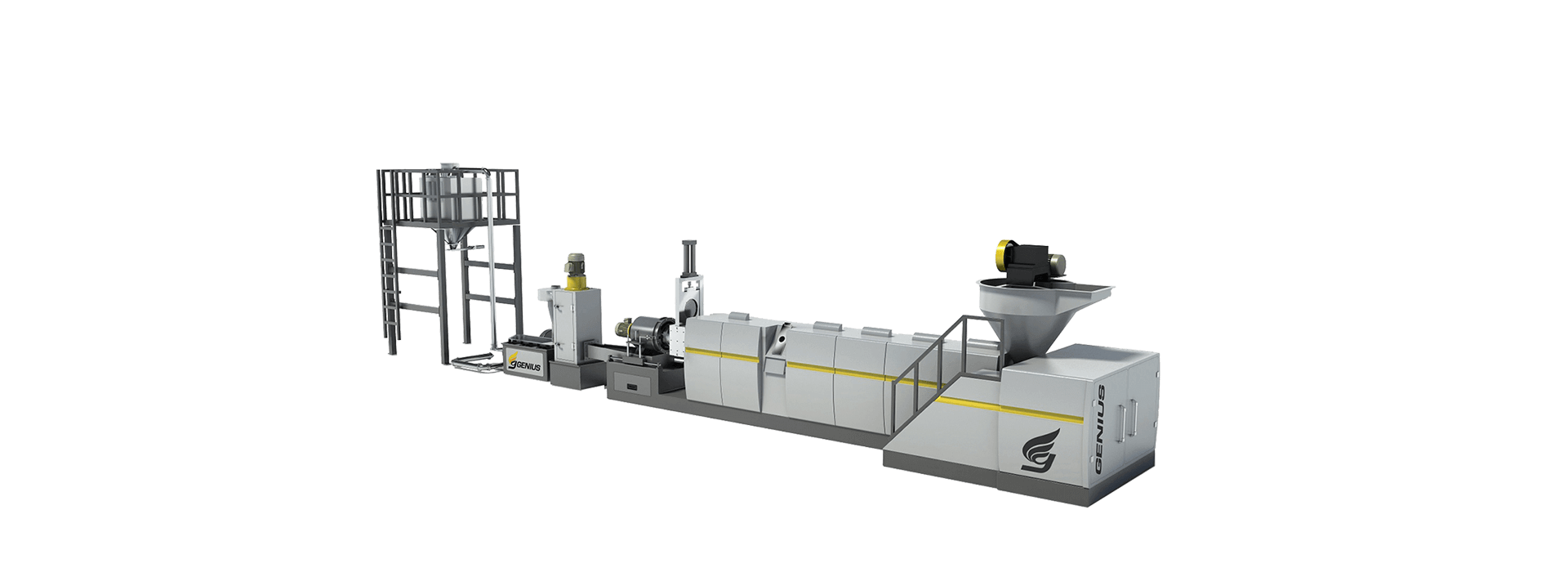
(Force Hopper Feeding Plastic Recycling Machine, H Series)
The general process includes:
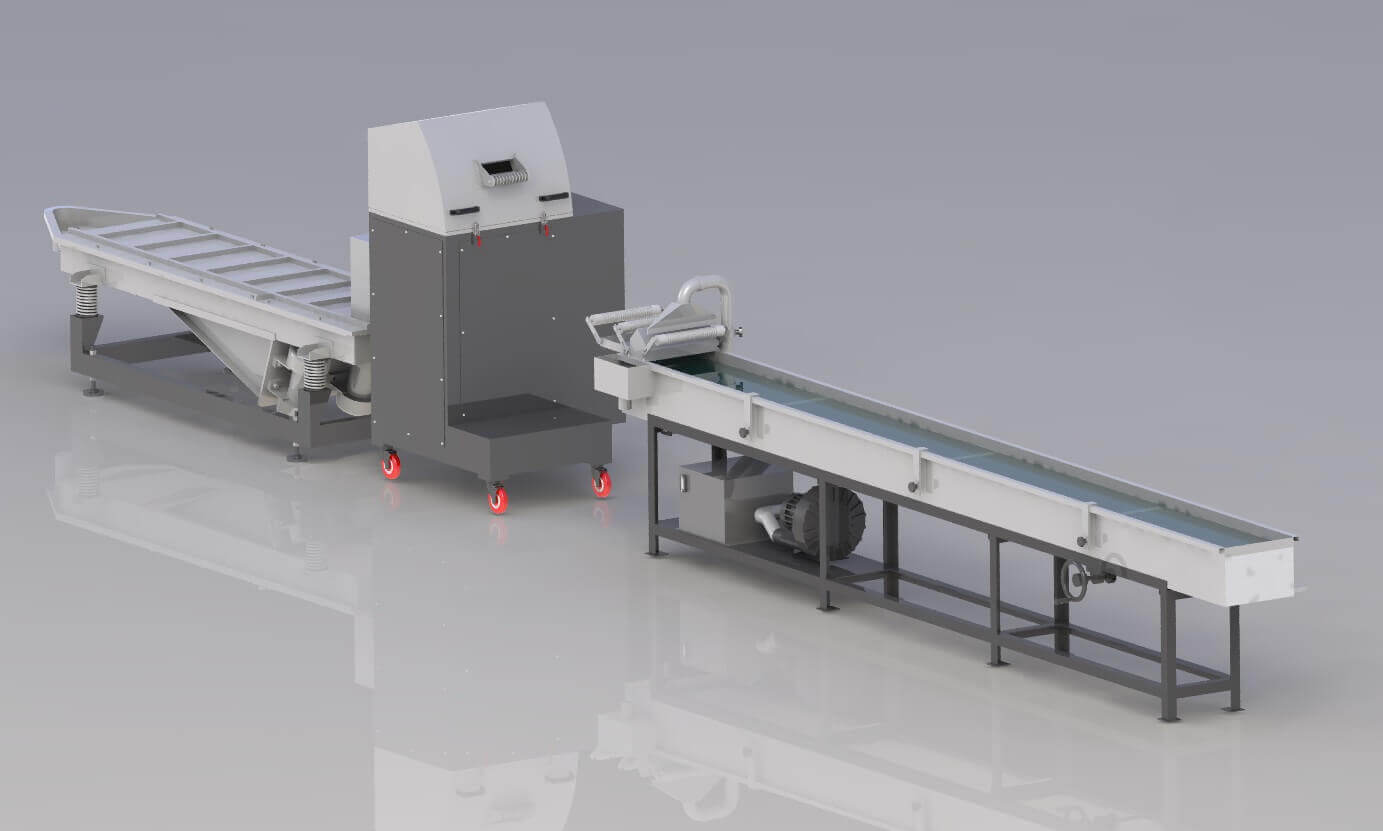
(Strand Pelletizing System)
The resulting pellets can be evaluated for reuse in plastic manufacturing applications, including injection molding and sheet extrusion, depending on their material properties and the requirements of the final product.
One of the advantages of recycling clean industrial IC trays is that a washing process is often unnecessary.
Unlike post-consumer plastic waste, IC trays collected directly from semiconductor assembly, testing, and electronics manufacturing facilities may have relatively low levels of contamination.
If the trays are free from significant dust, oils, labels, and other contaminants, they can often be processed directly through crushing and pelletizing.
Eliminating unnecessary washing equipment can help:
However, the need for washing should always be evaluated based on the actual condition of the scrap.
Important: Although clean IC trays may not require washing, some engineering plastics, particularly hygroscopic materials such as PC, require proper pre-drying before extrusion.
Excessive moisture during high-temperature processing can cause material degradation and reduce recycled pellet quality.
The quality and value of recycled IC tray pellets depend on several important factors.
IC trays may be manufactured from MPPO, MPPE, PC, ABS, PES, or other engineering plastics.
Mixing incompatible materials can reduce recycled resin quality and cause unstable extrusion performance.
Sorting IC trays according to their resin composition is therefore an important first step.
Certain engineering plastics absorb moisture from the surrounding environment.
For moisture-sensitive materials such as PC, inadequate drying can cause hydrolytic degradation during extrusion, affecting molecular weight and mechanical properties.
Suitable drying conditions should be selected according to the resin formulation.
Metal parts, labels, adhesive residue, dust, and other foreign materials may affect the extrusion process and final pellet quality.
Contaminants should be removed before processing, and an appropriate melt filtration system should be selected based on material characteristics.
Some IC trays contain carbon black, carbon fiber, or other conductive materials to meet ESD requirements.
These additives can influence melt filtration, equipment wear, recycled resin properties, and downstream applications.
The original ESD performance should not be assumed to remain unchanged after recycling. Recycled material intended for ESD-sensitive applications requires appropriate testing.
Different engineering plastics require different processing temperatures and extrusion configurations.
Proper temperature control, screw design, and feeding conditions help maintain stable processing and reduce the risk of thermal degradation.
Strand pelletizing is an established method for processing many engineering plastics.
For suitable IC tray resin formulations, it offers several practical advantages:
GENIUS Machinery offers Automatic Strand Pelletizing Systems for engineering plastic recycling applications, including PC and ABS.
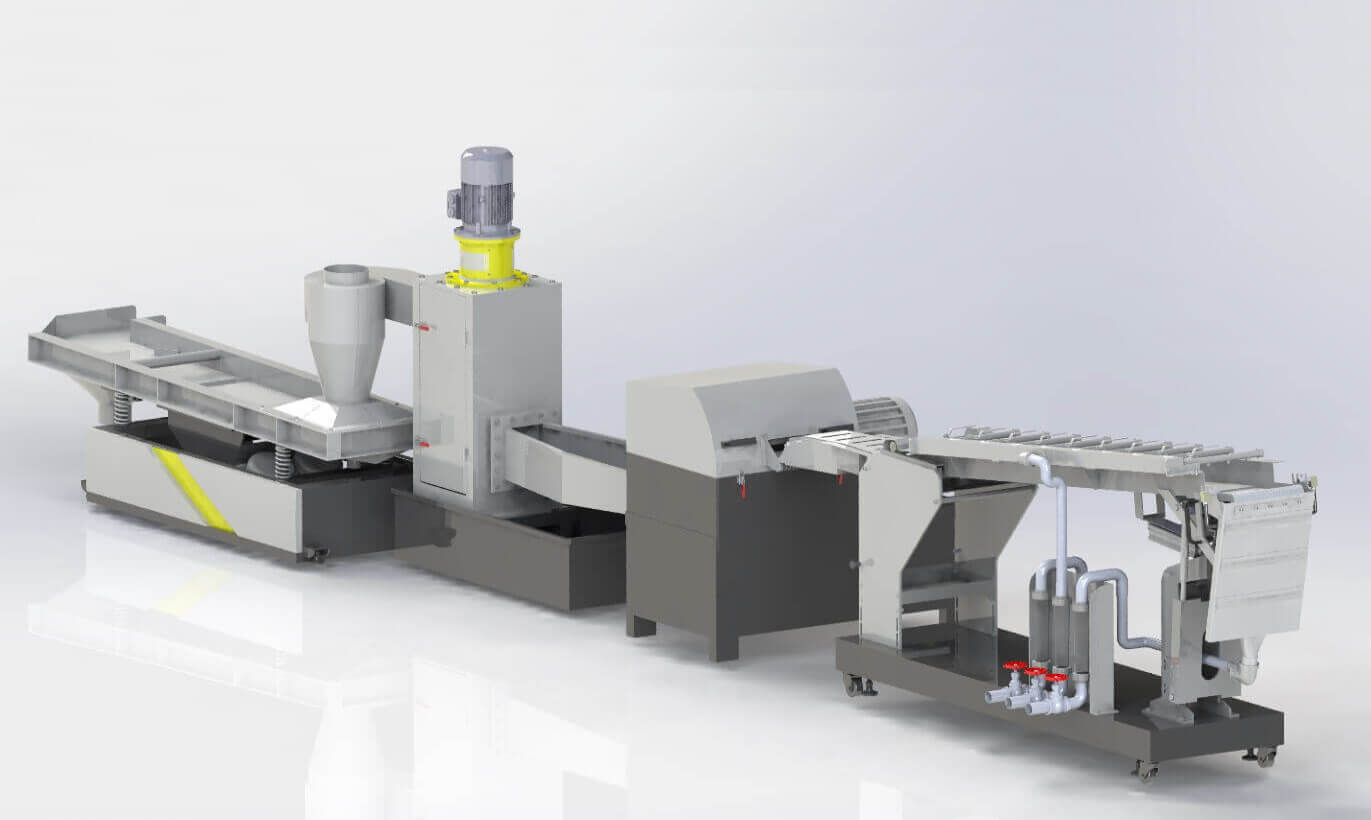
(Automatic Strand Pelletizing System)
The appropriate equipment configuration depends on the specific material, processing temperature, feeding characteristics, filtration requirements, and target production capacity.
For special engineering plastics or formulations containing conductive fillers, material testing is recommended before final equipment selection.
Different recyclers have different equipment requirements.
Some companies already operate plastic crushers and only need an additional pelletizing system. Others may be planning a new recycling operation and require a complete equipment configuration.
GENIUS Machinery can provide individual recycling machines or assist with the planning of an integrated recycling line.
For clean IC tray scrap, a typical configuration may include:
The equipment arrangement can be adjusted according to material characteristics, available factory space, production requirements, and existing machinery.
Before selecting an IC tray recycling machine, several details should be confirmed.
1. IC Tray Material
Identify the resin type, such as MPPO, MPPE, PC, ABS, or PES. If the material is a modified or blended engineering plastic, its composition should be confirmed whenever possible.
2. Material Condition
Determine whether the trays are clean industrial scrap or contain labels, dust, adhesives, or other contaminants.
3. Material Form
Confirm whether the material will be supplied as whole IC trays or pre-crushed flakes.
4. Required Production Capacity
Estimate the quantity of IC tray scrap available per hour or per month.
5. Recycled Pellet Requirements
Identify the intended application and any required specifications, such as melt flow properties, color, mechanical performance, and electrical characteristics.
Based on this information, GENIUS Machinery can evaluate the material and recommend a suitable recycling equipment configuration.
Yes. Many IC trays are manufactured from recyclable engineering plastics. With proper material sorting, preparation, and extrusion processing, suitable scrapped IC trays can be converted into recycled plastic pellets.
The feasibility and processing conditions depend on the specific resin formulation.
For clean industrial IC tray scrap, the two main machines are generally a plastic crusher and a plastic recycling pelletizing machine.
Additional drying, feeding, or material handling equipment may be required depending on the resin and processing conditions.
Not always. Clean IC trays collected from semiconductor or electronics manufacturing facilities can often be recycled without washing.
However, contaminated trays may require additional cleaning, and moisture-sensitive materials may still require pre-drying before extrusion.
Different resin types should be identified and separated before recycling unless their compatibility has been verified.
Mixing incompatible engineering plastics may negatively affect pellet quality and processing stability.
Potentially, but this depends on the material formulation and the technical requirements of the new trays.
Applications requiring specific ESD performance, heat resistance, dimensional stability, or mechanical properties require additional material testing and qualification.
Yes. GENIUS Machinery supplies individual plastic recycling machines as well as integrated recycling equipment solutions.
Customers who already own a crusher or other upstream equipment can consult GENIUS about selecting a suitable pelletizing system.
Scrapped IC trays from semiconductor and electronics manufacturing can be a valuable source of recyclable engineering plastics.
For clean industrial scrap, the recycling process can often be simplified to crushing and extrusion pelletizing, reducing the need for unnecessary washing equipment.
However, material identification, moisture control, and appropriate extrusion conditions remain essential for producing recycled pellets with consistent quality.
GENIUS Machinery provides plastic crushing and recycling pelletizing equipment for a wide range of industrial plastic recycling applications.
Whether you are planning a new IC tray recycling line or adding a pelletizing machine to your existing operation, our engineering team can help evaluate your material and recommend a suitable equipment configuration.
Contact GENIUS Machinery today with your IC tray material type, available scrap volume, and required pellet specifications to discuss your recycling equipment needs.


